
Learn The Fundamentals & Basics
Before you begin marketing, and as soon as you begin development, you should learn the basics and fundamentals of marketing. Why you learn these as soon as you start development is because many of the marketing practices will help you develop a more complete core loop, setup your code to scale, be analyze your player to build a better game, and allow you to better position your game.
Ready to Start?
Enroll in this track to track your progress and earn your Glitch Certificate.
Track Curriculum
Follow these lessons in order to master the subject matter.
How To Market Your Game
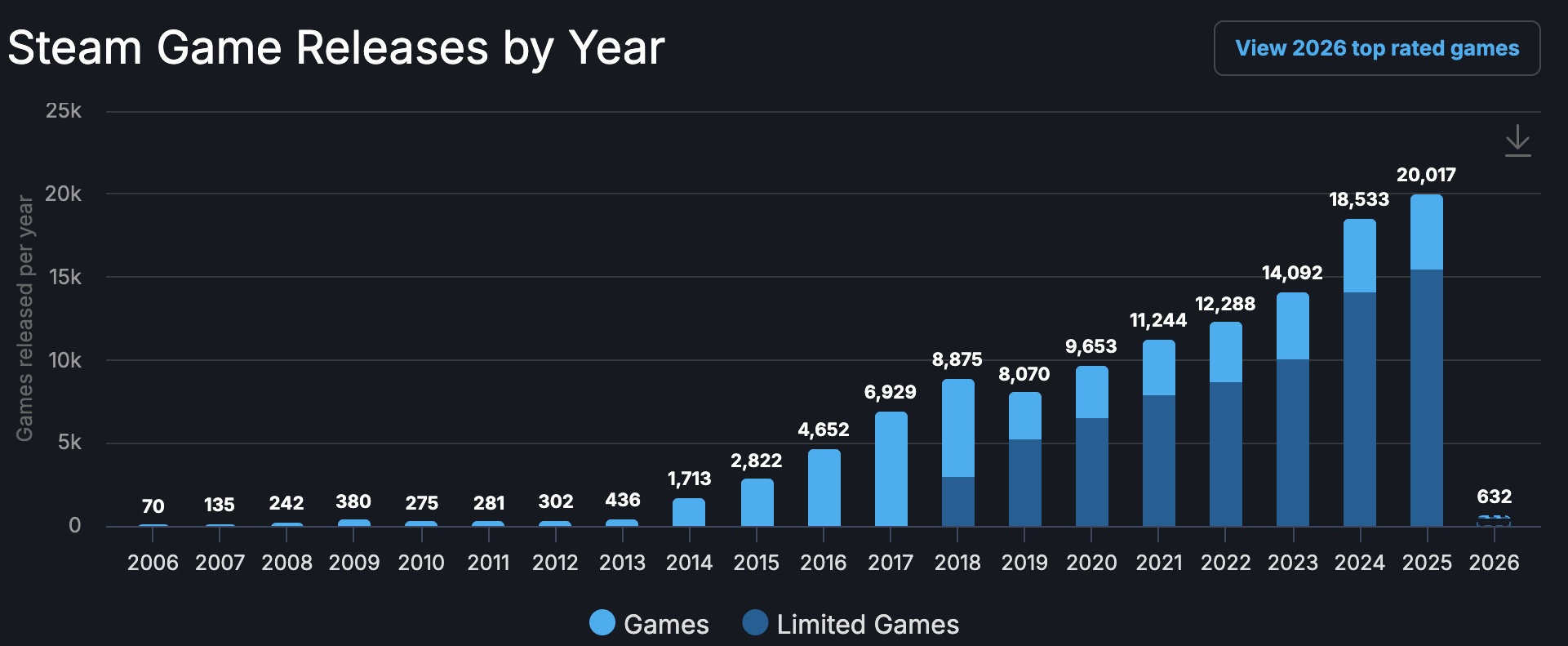
The leading question many developers ask themselves is: How do I market my game? As the gaming market becomes increasingly saturated, building a good game alone will no longer guarantee success. There needs to be a structured, intentional approach. Alone on Steam, the competition is not only 20k games released this year, but all the games released years prior that people are waiting on discounts to by.
Marketing is all about repeatable processes and scaling. If I can get 100 wishlists, and I keep doing the same things, can I get 100 more? How do I turn 100 wishlists into 1,000? How do I grow my downloads and purchases? How do I solve low playtime after installs?
The question of “How do I market my game?” is simply too broad. The first job of any developer is to narrow that question into something more specific. Those specific questions often fall into areas like:
- Social Media
- Influencers
- Advertising
- Events
- PR
- Storefront Optimization
- Leveraging Platform Algorithms
This lesson focuses on what areas developers should prioritize when marketing their game, and the three core factors that influence those priorities: the price of the game, the marketing beat, and the available budget.
Marketing Beats
What is a marketing beat? You might imagine someone pounding a drum and yelling “buy my game now!” But in reality, a marketing beat is a specific event that your marketing efforts are oriented around, and that event should have a measurable positive impact on the game. Marketing beats generally fall into two categories.
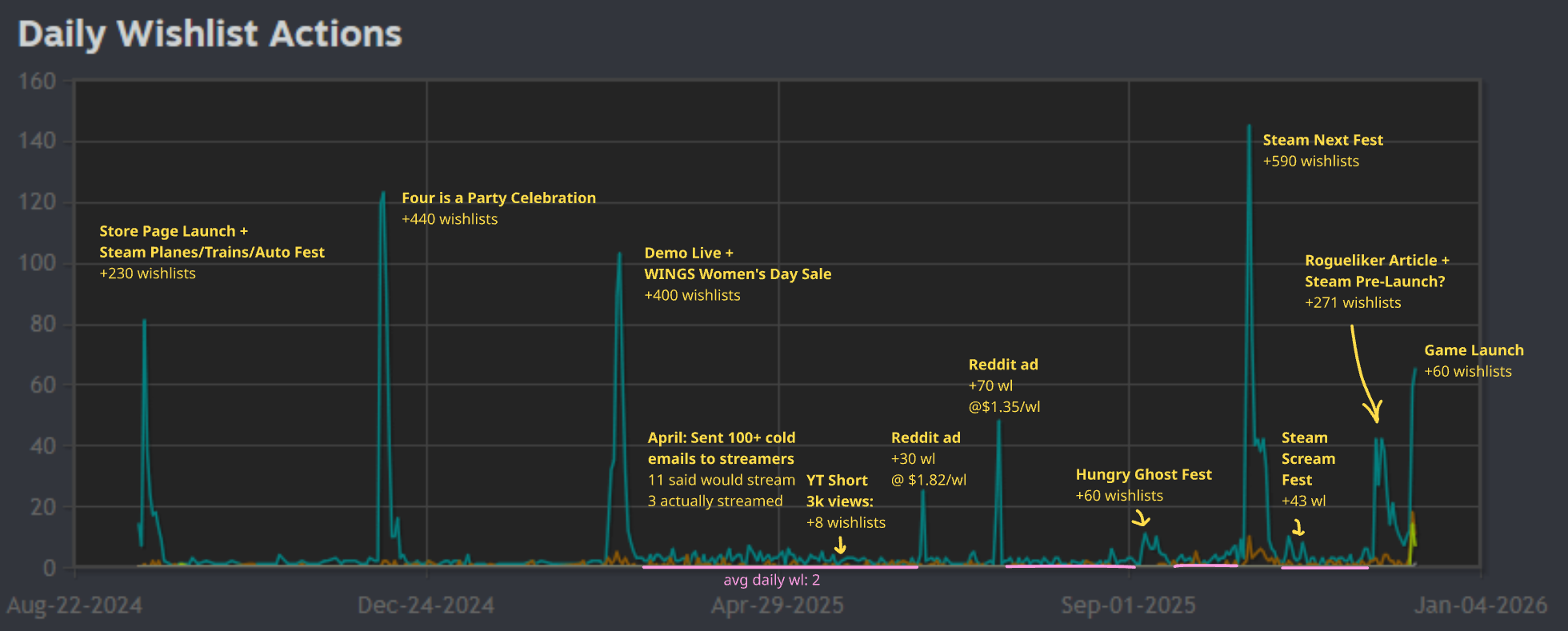
Pre-Launch Beats
- Fundraising: Raising money through something like Kickstarter
- Storefront Launch: When you first publish your game’s storefront on platforms like Steam
- Playtesting: Structured playtest sessions during development
- Demo Launch: When your demo is released and you want players to try it
- Events: Festivals, NextFest, conferences, or any event where your game is featured
- Early Access / Launch: When you finally release the game and let players play
How to Use Worldbuilding to Market Your Game More Effectively
As a developer, you might think that these things do not apply to your game, but when you critically think about it, they can apply to almost any game.
For example, imagine you are building an idle cozy game called Radicchio Rabbit, about a rabbit who wants to build a farm to feed his family. Let’s apply some world building.
“Long ago, animals evolved to the point where they learned how to farm. But animals began farming anywhere and everywhere without boundaries, and chaos ensued.
Eventually, all the animals came together and formed the World Farming Organization. This organization set the rules for where animals could farm, what they could grow, the currency used to buy supplies, and how they could trade with other farms.
The player starts the game by waking up on a bright sunny morning as Radicchio Rabbit, an energetic and optimistic rabbit that wants to create the most productive and healthy farm possible. Your babies will be due in one month, so you have to make every day count.”
If you think about this, through your game's lore you have now established several features in the core loop of your game:
- You have set restrictions on what can be grown.
- You have defined a currency that is used when buying supplies.
- You have created a commerce system for trading with other farms.
- You have established an organization the player can go to in order to resolve problems, such as disputes.
- You set a tone for the world and a looming date the player must progress towards.
Having world lore benefits all games because it allows for deeper storytelling and can even help flesh out game mechanics.
Player Role & Perspective (Very Important)
Then we can get the most critical piece of the lore - the player. The person we should care about the most as the story will revolve around them.Some key questions are:
- Who is the player in this world?
- Are they a named character, a blank slate, a profession, or an observer?
- Why does the player matter to the world?
- What does the world expect from them?
- What happens when the player fails?
- Is failure acknowledged in-world or ignored?
- Does the world react to poor vs good decisions by the player?
Lore Is the Start of Your Marketing
As you put together your lore, you will find that you are able to talk about your game more effectively, identify plot holes, and think about your core loop in greater depth. Lore also positions you to better describe your game to others:
- On Steam pages when writing descriptions.
- On your social media profiles.
- When entering your game into events.
- When pitching your game to publishers.
- It will help create hooks and taglines
- It will have marketing teams parameters to operate in
- It will help others create assets like trailers and key art
How to Use Game Analytics to Improve Wishlists, Onboarding, Retention, and Sales
Before we begin, here are some questions act as a quick diagnostic. If you cannot confidently answer several of them with data, it is a strong signal that your analytics coverage needs to be expanded to help you make data-driven decisions about your development.
- Can we clearly see how long players stay in the game during their first session, especially within the first 5, 10, and 15 minutes?
- Do we know exactly where players drop off during onboarding, and can we identify the specific screen, state, or mechanic causing it?
- Can we track every meaningful player action during onboarding and early gameplay, not just installs and sessions?
- Do we understand which levels, quests, or objectives players are completing, and where progression consistently breaks down?
- Can we identify moments of player confusion, such as repeated failed actions or circular behavior, using data rather than assumptions?
- Do we know which acquisition channels are driving installs and active play, not just clicks or wishlists?
- Can we connect marketing activity (ads, social posts, links) to in-game behavior and retention outcomes?
- Do we have visibility into how players evaluate our game before installing, including website visits, key pages viewed, and referral sources?
- Can we confidently answer which features, systems, or mechanics contribute most to longer play sessions and repeat engagement?
- If we made a major design or marketing change today, would we be able to measure its real impact on player behavior within days, not weeks?
In-Game Analytics and Onboarding
The first area of data you need to collect is your game’s onboarding, so you can understand what players do when they first open your game. We’ve found that in many games, users are not even making it five minutes into the experience.
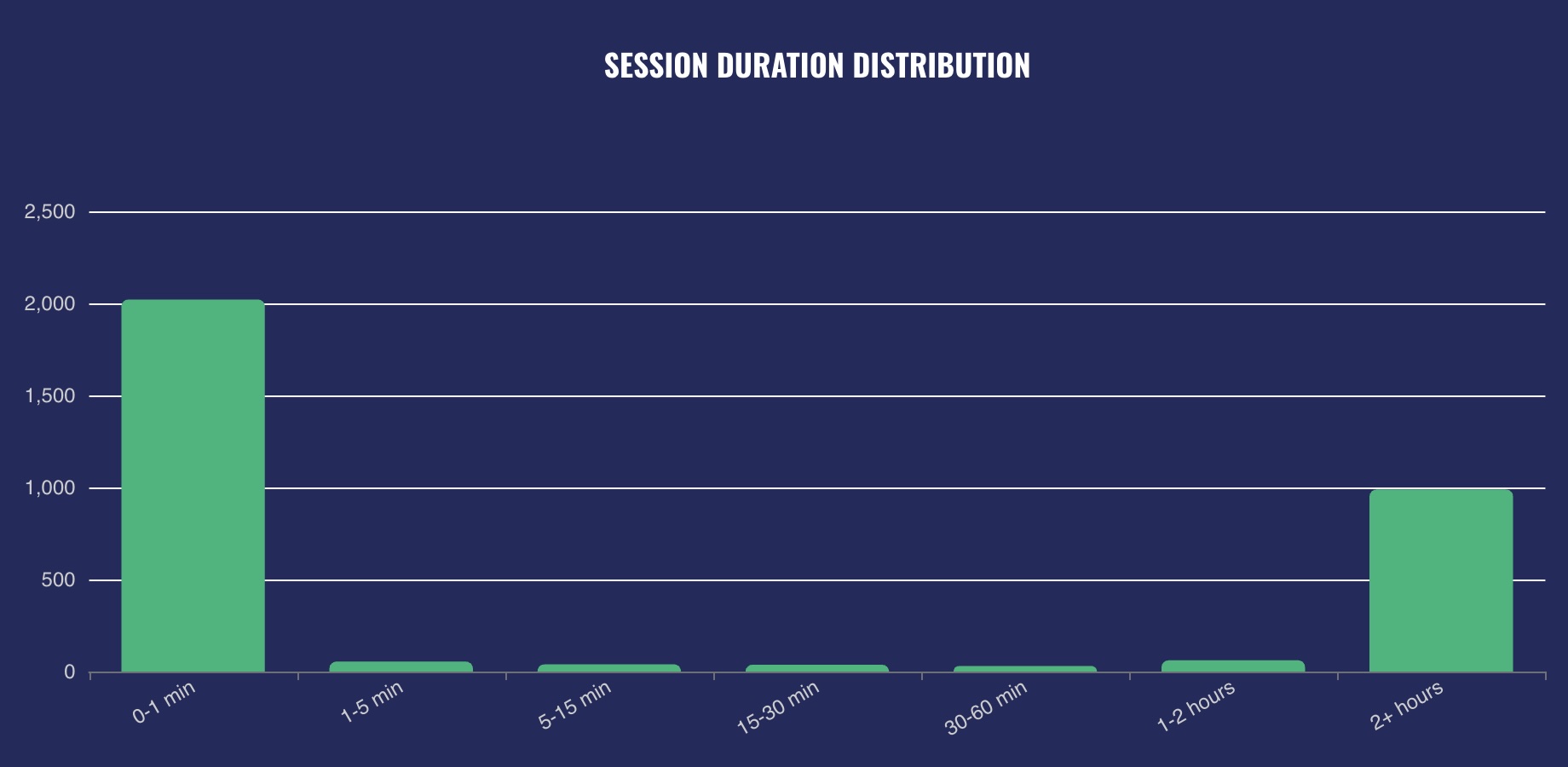
If more than 60% of players are not playing for more than five minutes, you have an onboarding problem. Think about the effort a player takes to research your game, wait for it to download, open it up, and then only play for two minutes before deciding it’s not for them.
Many games don’t even know they have this problem because they are not recording the data. What you want to build is what’s known as a funnel that tracks a user through every step and records what happens at each stage. For example:
Step 1: Loading Screen
- Available User Actions: None
- Retained Users: 100%
Step 2: In-Game Trailer Screen
- Available User Actions: None
- Retained Users: 70%
Step 3: Title Screen
- Available User Actions: Start Game, Preferences, Credits, Exit
- Actions Users Took: 55% Start Game, 40% Preferences, 1% Credits, 4% Exit
- Retained Users: 66%
With data like this, you can start to understand your players at a much deeper level. In this example, 30% of users dropped off during the game’s trailer screen. As a developer, you might decide to remove the trailer entirely or allow players to skip it. Whatever decision you make, the key point is that you can clearly identify the problem area, something that would not be possible without data.
If you have a strong onboarding experience, you should see at least 80% of players making it to the 10–15 minute mark before deciding whether to continue or quit. Some best practices for effective onboarding include:
- Teach by playing, not by telling: Introduce mechanics through interaction instead of text-heavy tutorials. Let players perform actions immediately to learn core controls.
- Front-load the fun: Get players to a satisfying moment (combat, puzzle solve, win, upgrade) within the first few minutes. Avoid long intros, lore dumps, or menus before gameplay begins.
- Limit cognitive load: Introduce one mechanic at a time. Avoid overwhelming players with multiple systems, currencies, or UI elements early on.
- Make objectives crystal clear: Always communicate what the player should do next and why. Use visual cues, highlights, arrows, or subtle guidance instead of long explanations.
- Design for failure without punishment: Allow players to experiment safely. Early failure should be fast, forgiving, and instructive, not frustrating.
- Contextual tutorials over modal pop-ups: Teach mechanics exactly when they become relevant. Avoid blocking gameplay with excessive tutorial screens.
- Respect player autonomy: Allow experienced players to skip or accelerate tutorials. Avoid over-guiding once players demonstrate mastery.
How to Build a Game Audience Before Launch (And Why It Determines Success)
A game's success, and de-risking failure, is dependent on the number of people it can get to wishlist or pre-order before the game's launch as a game will see up to 90% of its conversions in the first month. This true for indies games to AAA and for both premium and freemium games. Take Call of duties first months as an example.
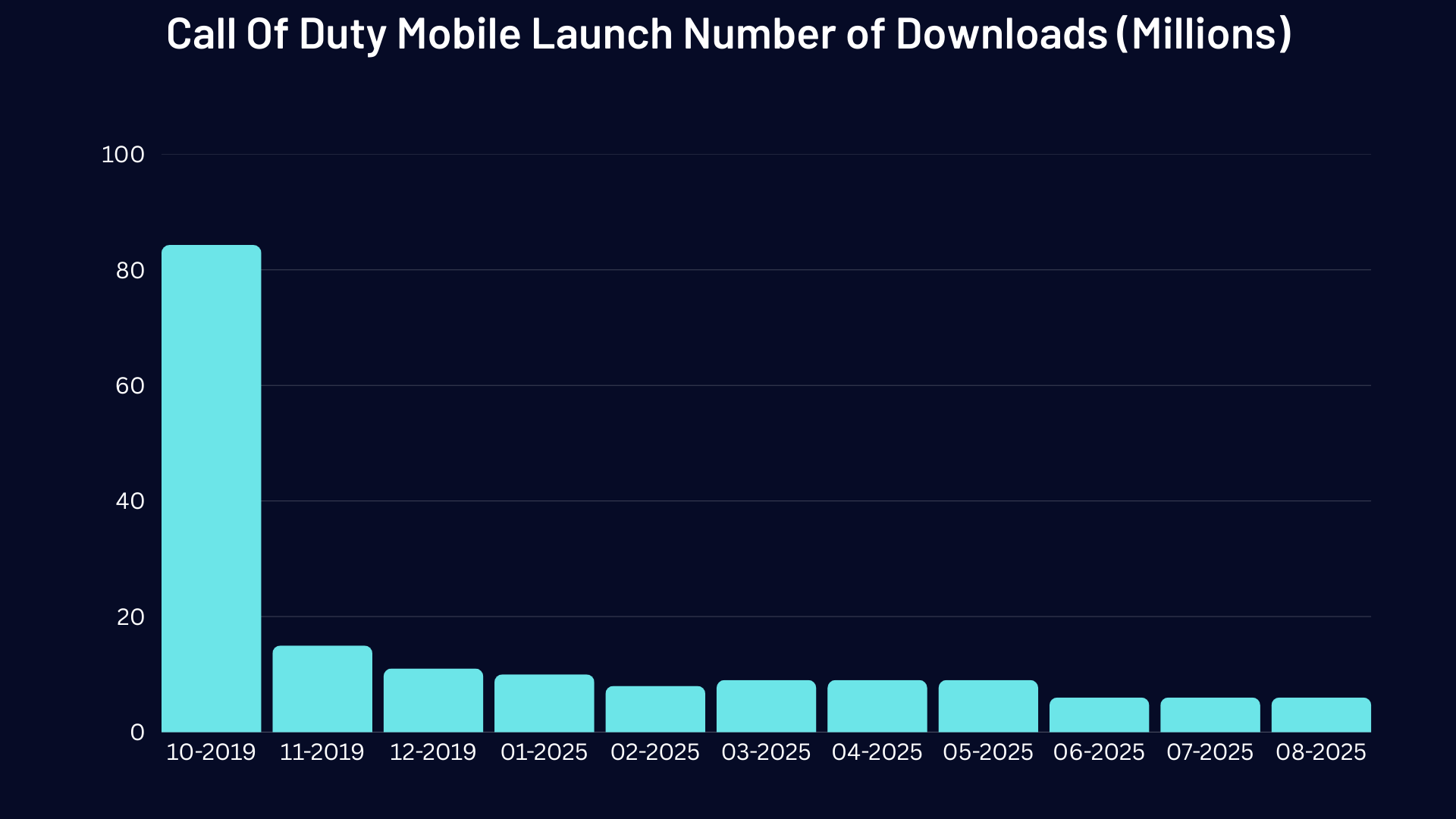
Typically, the longer a game spends building an audience, the better the launch of the game, but building the audience takes time. The timelines differs slightly between indie studios and Triple I / AA studios, primarily based on budget, ranging from months to years.
3 Months Is the Absolute Minimum
The shortest amount of time you should market your game is three months. Anything shorter does not allow enough time to optimize campaigns. You also won’t have sufficient time to execute important beats such as playtesting and iteration.
6 Months for Indies With Budgets
If an indie studio has a small marketing budget ($10k to $100k), six months becomes a strong timeframe. This allows teams to optimize and scale ad campaigns, find and work with influencers, conduct playtesting, grow social media channels, and participate in festivals.
1 to 1.5 Years for Triple I / AA
With larger marketing budgets ($100k to $3 million), studios can fully optimize their efforts. This includes proper unveilings and announcements, large-scale playtests, and stronger, more consistent growth across all channels.
2–5 Years for Indies With No Budget
With no budget, you will likely need all the time you can get. Getting your storefront live early and collecting as much interest as possible is critical. Building in public and leveraging social media tends to be the most effective approach in this scenario as you will need a slow and long term growth plan without a budget.