
Advertising
Advertising is how games can systematically scale their user base. Learn everything you need to know about advertising from privacy laws, optimizing creatives, using conversion apis, and lower your acquisition costs.
Ready to Start?
Enroll in this track to track your progress and earn your Glitch Certificate.
Track Curriculum
Follow these lessons in order to master the subject matter.
How To Lower Your Game's Advertising Costs with Conversion API
As you want to get more advanced, there are different kinds of events you can send to the conversion API beyond just the conversion. Now each CAPI has its own set of events that it uses.
For example:
- Facebook: AddPaymentInfo, AddToCart, AddToWishlist, CompleteRegistration, Contact, CustomizeProduct, Donate, FindLocation, InitiateCheckout, Lead, Purchase, Schedule, Search, StartTrial, SubmitApplication, Subscribe, ViewContent
- Reddit: Page Visit, View Content, Search, Add To Cart, Add To Wishlist, Purchase, Lead

All of those are standard events the specific API has built in. But you can add your own custom events as well. Now here is where we can start to get a little bit advanced with the API. Sending events like PageVisit are good for retargeting (we will cover that later), but installs are always the main metric to focus on, especially for Free To Play Games.
Training the CAPI
These events allow you to train the CAPI by sending it data for every person that installs the game—it will show your ad to more people who are likely to install. A step further is targeting people that are likely to retain. In turn, the ad platform will then start to send you more people that exhibit the actions that you're sending back.
For Free2Play Games, in marketing we do something called Whale Hunting, where a tiny percentage of the users make up the vast majority of revenue. We care about acquiring those users, so we can train the CAPI not just on the install but with Custom Events on how long the user retains for (Day 7, Day 15, etc). This is how you can improve your ROAS.
Re-Targeting
Another important function the CAPI helps with is re-targeting. Notice that all CAPIs have the standard events for viewing content. When advertising, a person might be interested in the product but not ready to purchase. So people do their research.
They look at the reviews of user players, visit the website, check out their social media, read the wiki and everything else about the game. Side note: we've built wikis for games and found that people spend an average of 9 minutes and 40 seconds on a wiki. So to help your game's chances of conversions, it can be beneficial to put together content around your game so people can research and influence their purchase decision.
As they are researching it, this data can be sent back to the CAPI, which then lets it know to retarget a user that has shown interest but has not yet made a conversion.
Understanding Privacy Laws When Advertising
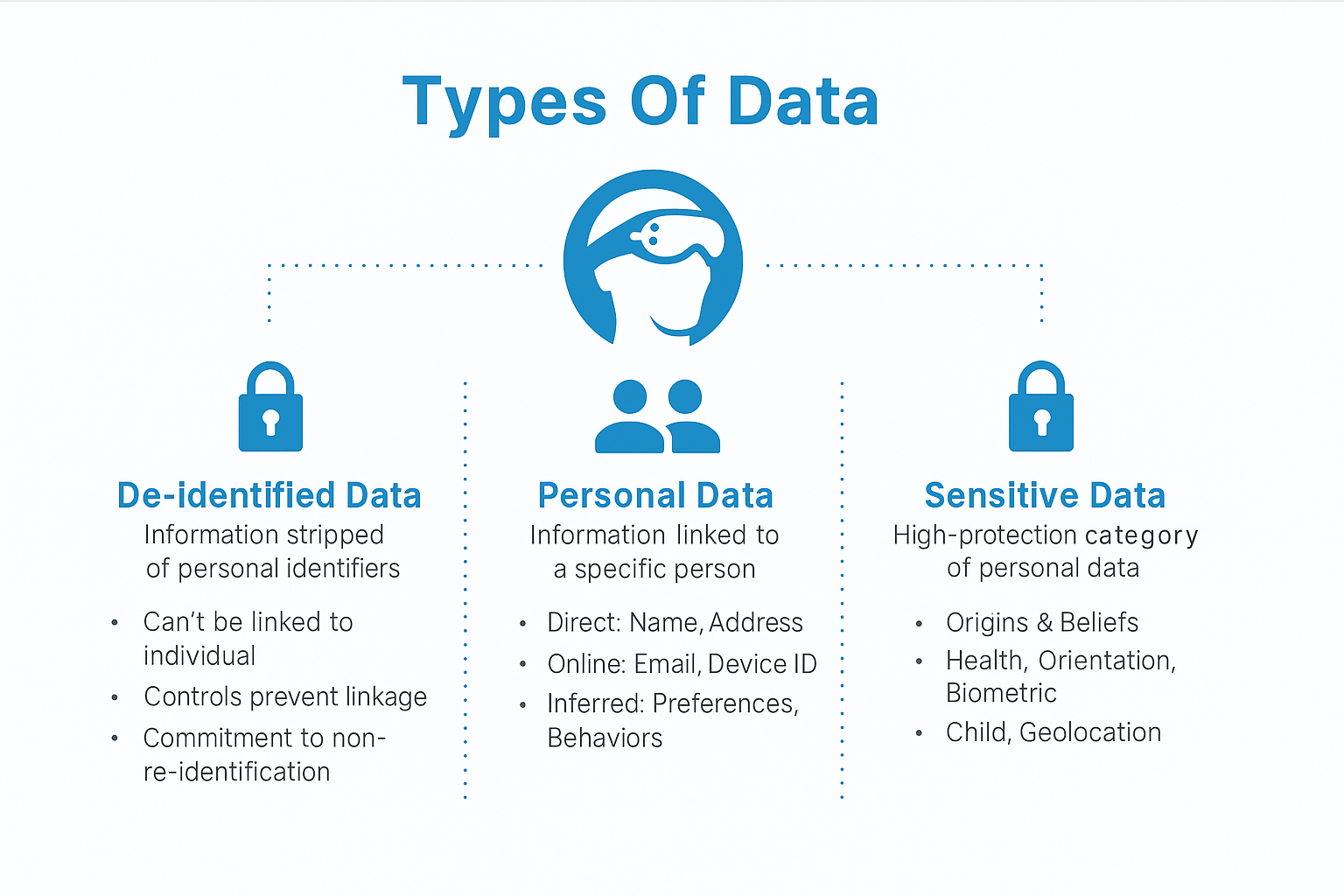
First we should examine the types of data that can be recorded about a user, because not all of them are the same. Now the type of data is normally defined by the law, and how the law defines it can change from region to country. The below are general types that are most used:
De-identified Data
De-identified data is information that has been stripped of personal identifiers to the point where it can no longer be connected back to a specific person.
- Cannot be reasonably linked to an individual or device: The information cannot reasonably be used to infer information about, or be linked to, a specific person or a device associated with that person.
- Reasonable measures are taken: The entity holding the data (the "controller") must take reasonable steps to ensure the data cannot be associated with an individual.
- Public commitment to non-re-identification: The controller must publicly promise to handle the data only in its de-identified state and not attempt to re-identify it.
- Contractual obligations for recipients: Any third party that receives the data must be contractually bound to the same standards of not attempting to re-identify the data.
For example, let’s see you get a report that 27% of the people that engage with your ad are males, that data is de-identified because there is no way of linking that back to a specific user.
Personal Data
In simple terms, personal data is any information that is linked or can be reasonably linked to a specific person. This can be:
- Direct Identifiers: Name, address, social security number, passport number, etc.
- Online Identifiers: IP address, email address, device IDs, cookies, and other tracking technologies.
- Inferred Data: Information derived from other data points to create a profile about a person's preferences, behaviors, or characteristics.
Certain laws require the user to opt-in to collect personal data, while other laws auto opt-in the user but the user has the right to opt-out.
Sensitive Data
The final category is "sensitive data," which is a specific category of personal information that receives a higher level of protection, requiring your explicit "opt-in" consent before it can be processed. Here is a short and concise summary of what is considered sensitive data:
- Racial or ethnic origin
- Religious beliefs
- Mental or physical health condition or diagnosis
- Sex life or sexual orientation
- Citizenship or immigration status
- Genetic or biometric data used for the purpose of uniquely identifying you
- Personal data collected from a known child (under the age of 13)
- Precise geolocation data (your specific location within a radius of 1,750 feet)
Almost all laws require that the user explicitly give consent when utilizing sensitive data.
Laws Currently Affecting Data Collection
There are laws already in place that place restrictions on the data that can be collected. Below are various examples that set both country-wide and state-specific laws. These are brief descriptions as covering the full laws are out of scope of this article and require a lot more analysis.
How to Lower Your Cost Per Wishlist and Install While Increasing Game Revenue
How to Debug Your Game Marketing Ad Campaigns
For example, if you were to advertise in the United States, Netherlands, France, Russia, and Australia, you will probably need about 10,000 impressions each to see some meaningful data, but you only have $100 of budget.
- If the CPM (cost per 1,000 impressions) is $5 and you're spending $100, each country would only get 2,000 impressions.
- That has to be further divided by device, placement, and which creative. If your CTR is 1%, then 1% of 10,000 is 100 clicks spread across the different countries—at best that might be 20 per country.
The volume is too low to draw a meaningful conclusion. So limit your initial variables (if you have the budget to spend, you can add more variables) or increase your ad budget for testing by a lot. Many larger studios, AA and Triple spend $5k to $10k just to test a campaign.
If you are limited on budget and want a small test, here is an example:
- 1 Ad Platform: TikTok, Meta, YouTube, Reddit—decide which ad platform you want to test.
- 1 Country: Let's say the United States because in gaming this country tends to have the biggest spenders.
- 2-3 Creatives: Depending on the ad platform, you might want to do a video and image, or maybe 2 videos and 1 image.
- 1-2 Placements: What are the top 2 placements on the ad platform that you are using?
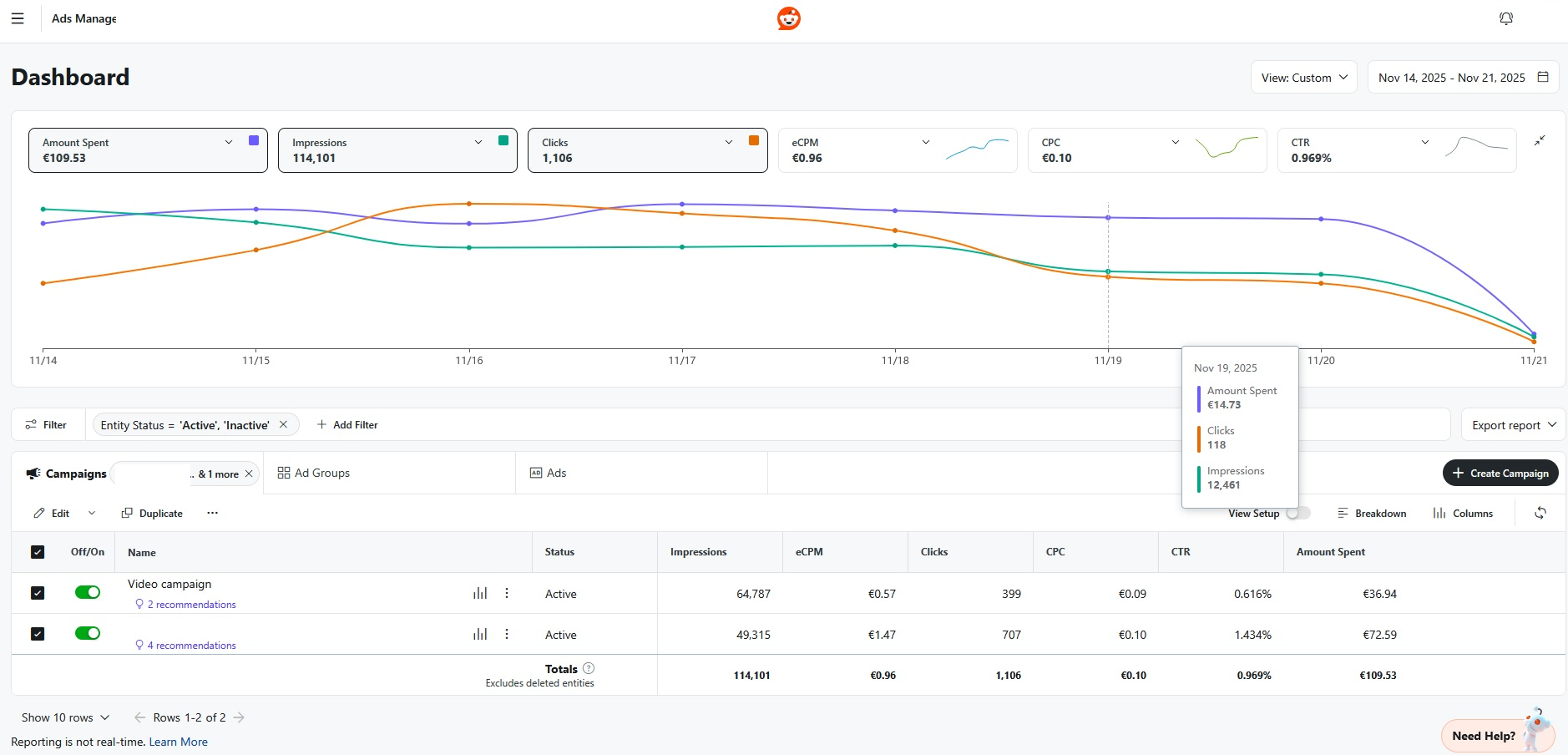
Hopefully this makes things a lot simpler in first deciding if your campaign is working. But again, if you have the budget, you can always go up in your ad spend to to test more variables and get more results, example below.
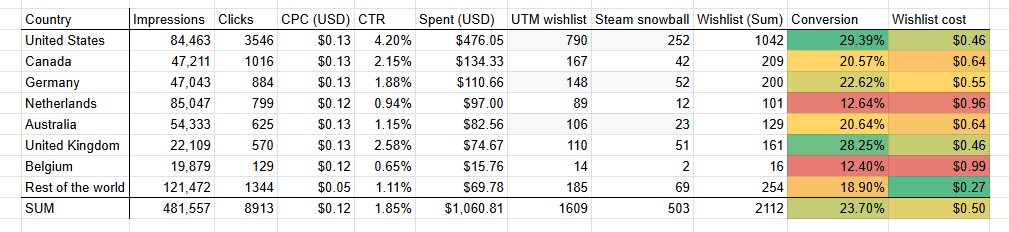
Notice in the spreadsheet above from a game's ad campaign, Belgium at 129 clicks isa clear loser for the ad spend. Now let's diagnose step by step:
- Costs A Lot To Get A Click: If you find that you are spending over $5 to get a single click, you may be targeting the wrong audience or your creative is not resonating. Fix the targeting with more research or conversion APIs (described in the next section).
- Low Click Volume: If you have less than 100 clicks for a segment of your campaign, give the campaign more time. It might cost around $100 to get those results depending on the platform.
- Good CTR - Bad Conversion: Check the behavior on the landing page.
Conversion API/Events Management For Targeting
A very important topic that is often overlooked in gaming when it comes to advertising is the utilization of conversion APIs/event management.
You spend a lot of time mastering your CTR at the lowest cost and you get the creative right, the correct countries, and know your placements. Targeting is still a bit hard when it comes to getting the exact best audience, and there are a lot of targeting options in ad platforms.
This is where conversion APIs step in to help you advertise your game to the right audience that is likely to convert. You must train ad platforms by sending data back about users who actually convert, and the ad platforms help you with the targeting.