
How Game Communities Impact Wishlists, Retention, and Revenue - Lesson Preview
A community is anywhere you can get people to congregate around your brand or game, and where you can openly engage with them. The mistake we often see in gaming is focusing only on Discord as the community. When you apply this broader definition, your community can exist across several different platforms.
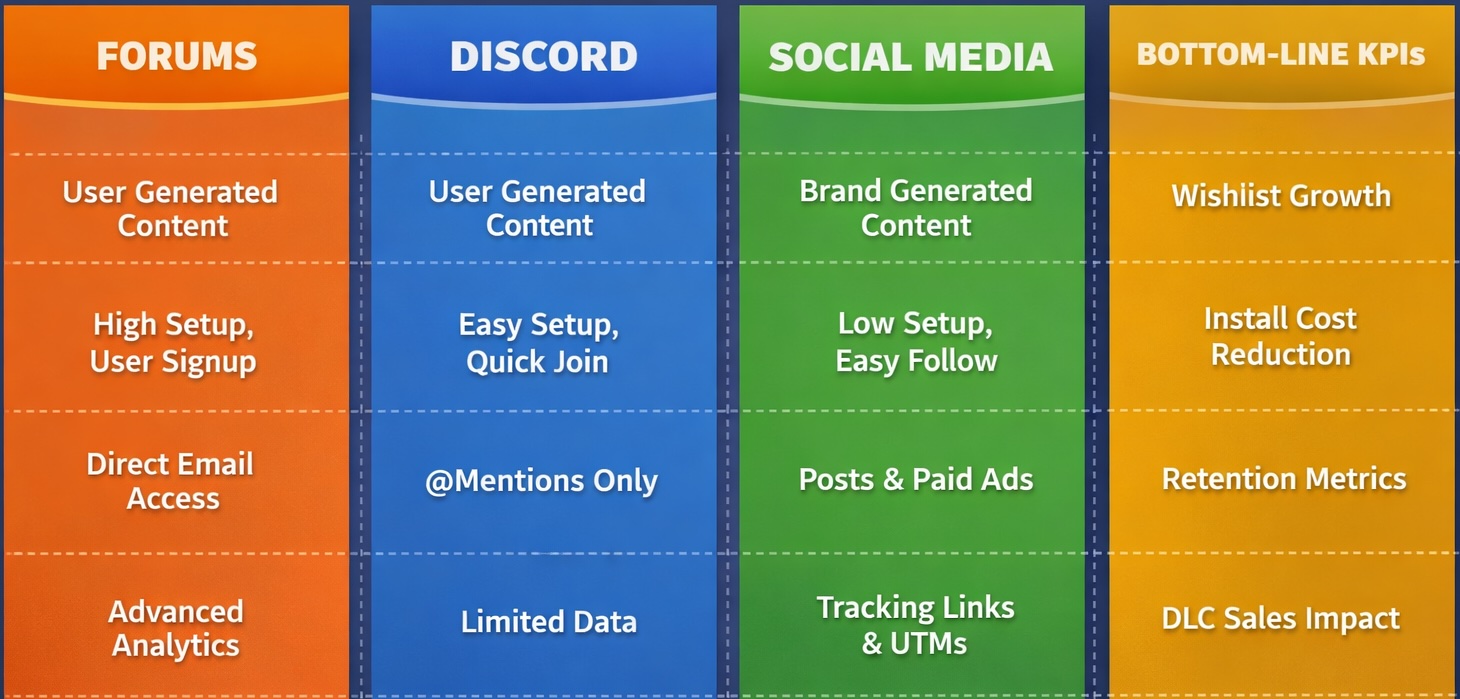
Because there are so many ways to build communities, we need to evaluate them based on what is best for your game. We evaluate community platforms in terms of content creation, friction in creating or joining one, the ability to communicate with your community, and the ability to measure community success against your game’s goals.
1) User-Generated Content (UGC) vs Brand-Generated Content (BGC)
The first thing to look at in a community is who generates the content. Is it users creating UGC (user-generated content), or is it BGC (brand-generated content)? Each has its own benefits and drawbacks.Creating content is time-consuming. When your fans create content for you, it saves a lot of time and money, and it can scale awareness around your game. However, users can also create content that doesn’t align with your brand values or messaging, and control can be lost.
2) Friction
How much friction does the community create for both you and the user? Does it take a lot of time for you to set up? Is it easy for a user to join? These are important considerations when thinking about any community.
3) Ability To Communicate With Your Community
Your game needs to be able to communicate with its community effectively. This could be through email, push notifications, or even paid reach. An important factor to consider when building your community is the level of effort required to communicate, the percentage of your community you can realistically reach, and how many of them will respond.
4) Effect On Bottom-Line KPIs
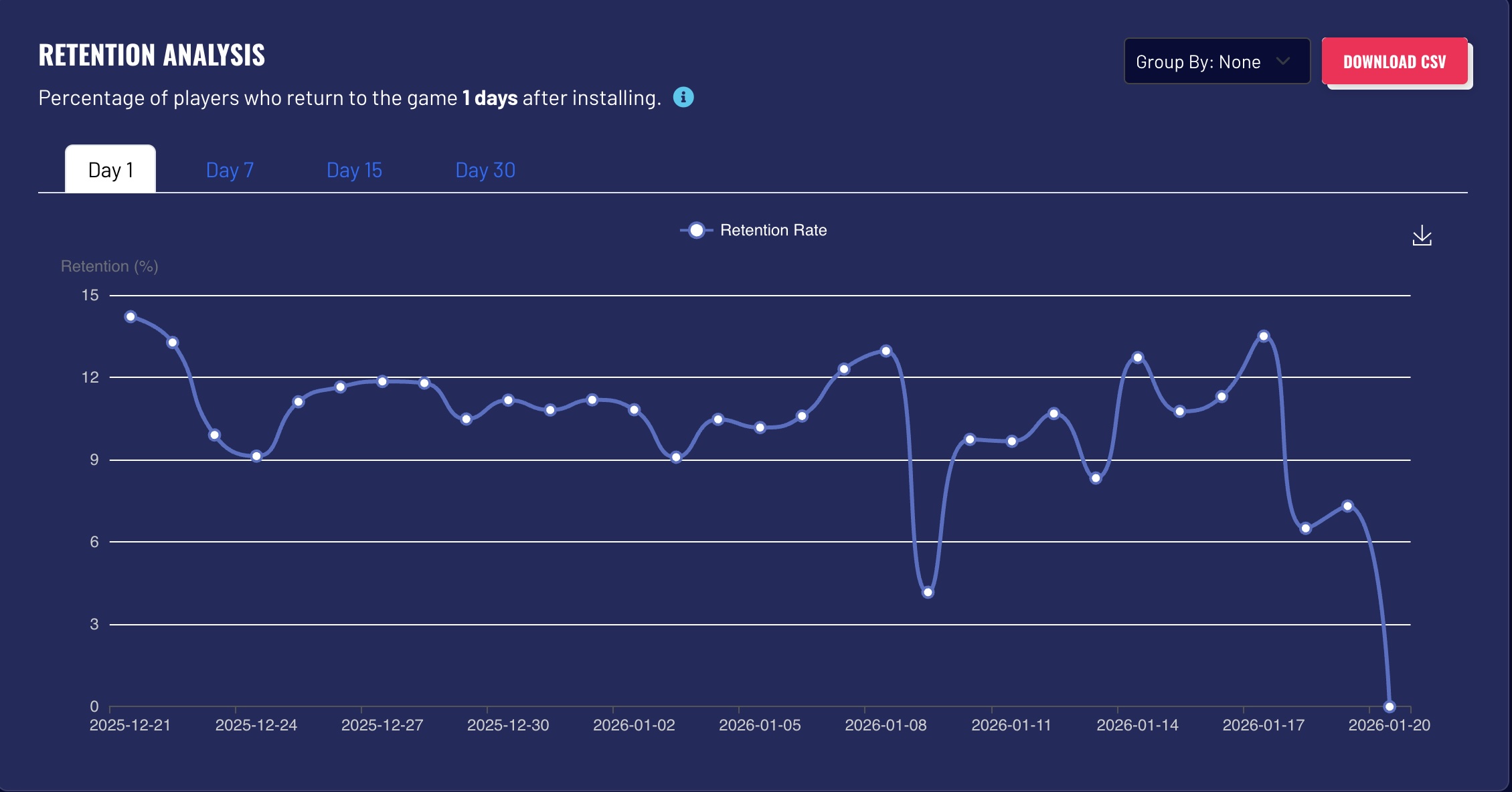
The fourth, and most important, aspect of a community is how it affects your bottom-line KPIs (key performance indicators). For games, bottom-line KPIs can include:
- Measuring wishlist growth
- Measuring how wishlists convert into sales
- Seeing whether cost per install is lowered
- Calculating the effect on Day 7, Day 15, and Day 30 retention
- Seeing the impact on sales for items like DLC
When you can tie a community directly to a bottom-line KPI, it allows you to place a real numerical value on that community instead of chasing vanity metrics. Now that we have an understanding of communities and how to measure them, we can look at several community platforms and evaluate them for games.
Forums
In the early days of the internet, when gaming first started going online, forums were one of the earliest forms of community. This goes back to software like phpBB and vBulletin—back when PHP was the hot language.
Continue Reading This Lesson
Join the academy to unlock the full video and deep-dive strategies.
Create Free Account