
How to Use Game Analytics to Improve Wishlists, Onboarding, Retention, and Sales - Lesson Preview
Before we begin, here are some questions act as a quick diagnostic. If you cannot confidently answer several of them with data, it is a strong signal that your analytics coverage needs to be expanded to help you make data-driven decisions about your development.
- Can we clearly see how long players stay in the game during their first session, especially within the first 5, 10, and 15 minutes?
- Do we know exactly where players drop off during onboarding, and can we identify the specific screen, state, or mechanic causing it?
- Can we track every meaningful player action during onboarding and early gameplay, not just installs and sessions?
- Do we understand which levels, quests, or objectives players are completing, and where progression consistently breaks down?
- Can we identify moments of player confusion, such as repeated failed actions or circular behavior, using data rather than assumptions?
- Do we know which acquisition channels are driving installs and active play, not just clicks or wishlists?
- Can we connect marketing activity (ads, social posts, links) to in-game behavior and retention outcomes?
- Do we have visibility into how players evaluate our game before installing, including website visits, key pages viewed, and referral sources?
- Can we confidently answer which features, systems, or mechanics contribute most to longer play sessions and repeat engagement?
- If we made a major design or marketing change today, would we be able to measure its real impact on player behavior within days, not weeks?
In-Game Analytics and Onboarding
The first area of data you need to collect is your game’s onboarding, so you can understand what players do when they first open your game. We’ve found that in many games, users are not even making it five minutes into the experience.
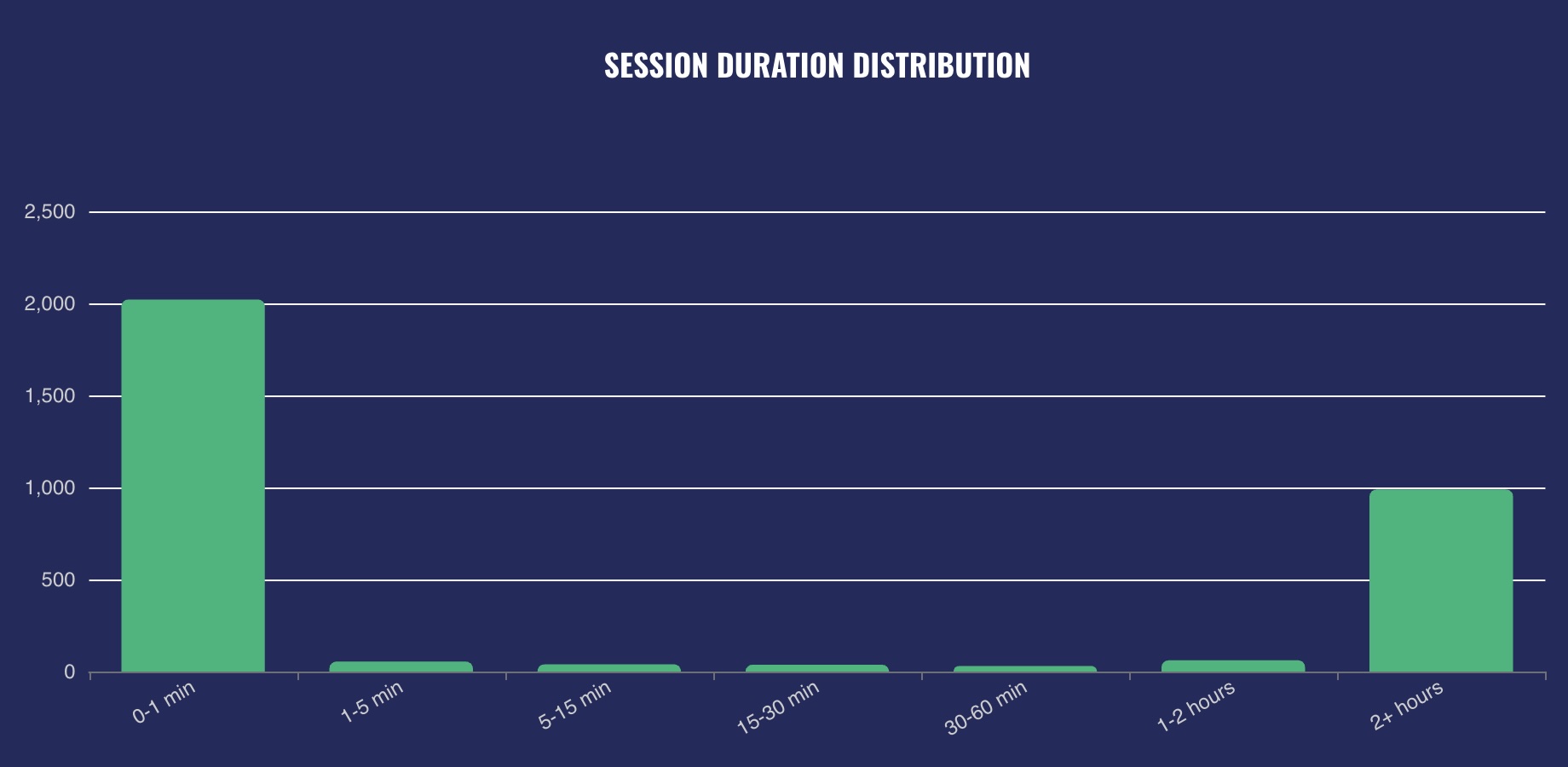
If more than 60% of players are not playing for more than five minutes, you have an onboarding problem. Think about the effort a player takes to research your game, wait for it to download, open it up, and then only play for two minutes before deciding it’s not for them.
Many games don’t even know they have this problem because they are not recording the data. What you want to build is what’s known as a funnel that tracks a user through every step and records what happens at each stage. For example:
Step 1: Loading Screen
- Available User Actions: None
- Retained Users: 100%
Step 2: In-Game Trailer Screen
- Available User Actions: None
- Retained Users: 70%
Step 3: Title Screen
- Available User Actions: Start Game, Preferences, Credits, Exit
- Actions Users Took: 55% Start Game, 40% Preferences, 1% Credits, 4% Exit
- Retained Users: 66%
With data like this, you can start to understand your players at a much deeper level. In this example, 30% of users dropped off during the game’s trailer screen. As a developer, you might decide to remove the trailer entirely or allow players to skip it. Whatever decision you make, the key point is that you can clearly identify the problem area, something that would not be possible without data.
If you have a strong onboarding experience, you should see at least 80% of players making it to the 10–15 minute mark before deciding whether to continue or quit. Some best practices for effective onboarding include:
- Teach by playing, not by telling: Introduce mechanics through interaction instead of text-heavy tutorials. Let players perform actions immediately to learn core controls.
- Front-load the fun: Get players to a satisfying moment (combat, puzzle solve, win, upgrade) within the first few minutes. Avoid long intros, lore dumps, or menus before gameplay begins.
- Limit cognitive load: Introduce one mechanic at a time. Avoid overwhelming players with multiple systems, currencies, or UI elements early on.
- Make objectives crystal clear: Always communicate what the player should do next and why. Use visual cues, highlights, arrows, or subtle guidance instead of long explanations.
- Design for failure without punishment: Allow players to experiment safely. Early failure should be fast, forgiving, and instructive, not frustrating.
- Contextual tutorials over modal pop-ups: Teach mechanics exactly when they become relevant. Avoid blocking gameplay with excessive tutorial screens.
- Respect player autonomy: Allow experienced players to skip or accelerate tutorials. Avoid over-guiding once players demonstrate mastery.
Continue Reading This Lesson
Join the academy to unlock the full video and deep-dive strategies.
Create Free AccountReady to test your knowledge?
Complete the lesson quiz to earn the How to Use Game Analytics to Improve Wishlists, Onboarding, Retention, and Sales badge and progress toward your track certificate.